The University of Khartoum: Sustaining education during war
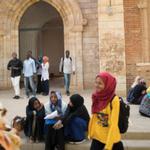
More than 1600 students from the University of Khartoum are currently sitting for their exams – in Cairo. The war may have forced faculty and students into displacement, but it has not halted their pursuit of higher education.
The University of Khartoum’s newly opened center in Cairo is bustling with activity at the moment. Faculty members are photocopying and scanning exam assignments, ensuring that students can complete their final assessments across rented venues in different locations.
This is how war has displaced a lot of, but not defeated, higher education in Sudan.
Keeping operations going
Following the outbreak of war in Sudan in April 2023, the majority of faculty and students from the University of Khartoum fled to safer areas within Sudan or neighbouring countries. Regular operations came to a halt, yet the university has tried to keep as many services as possible going. And despite extremely challenging circumstances, they have managed to deliver on many of their essential tasks.
Since then, more than 7500 students have graduated from the University of Khartoum thanks to creativity, adaptation, and tireless work. Centers have been opened in Cairo, Riyadh and Dubai in addition to three centers inside Sudan, all locations that are now home to many displaced Sudanese, enabling displaced students to sit for exams in person across a wide range of topics, from engineering to medical studies (23 faculties). The faculty and students are also, after what now amounts to years of experience, very well versed in online teaching and online student discussion groups.
Slowly rebuilding the University of Khartoum
According to Professor Gamal M. Abdo, Dean of the Faculty of Engineering and head of the University of Khartoum’s Cairo Center, the majority of the University of Khartoum’s building remain standing but require structural assessment before reopening. Rooms, laboratories, and lecture halls have been vandalized and looted. Replacing high-tech lab equipment will be costly and time-consuming, although the process has already started with alumni in the diaspora providing funding for new equipment for the university’s science labs.
Still, Professor Abdo is optimistic about the University of Khartoum’s future.
-We are rebuilding, albeit slowly. When conditions allow, we will be ready, he says.
Project