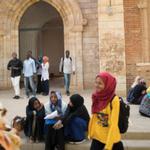
A thirsty coast: The struggle for freshwater access in Port Sudan and Red Sea State
Along Sudan’s Red Sea coast, access to clean water is a daily struggle. In Port Sudan and across Red Sea State, an arid climate, climate change, and weak infrastructure are placing already limited water supplies under severe pressure. The crisis has intensified as Port Sudan has become a major refuge for people fleeing the ongoing war, causing a rapid population increase and sharply increasing demand for water. This blog explores the scale of the crisis, how communities are coping, and what must change to secure a more sustainable water future.
A region under water stress
Port Sudan and the Red Sea State have very limited natural freshwater resources. Climate change, environmental damage, demand and a rapid increase in population make the problem worse. For many families, water scarcity is not an abstract statistic. It is a daily struggle that shapes every aspect of their lives. In northern Port Sudan, where the crisis is most acute, some communities have no access to safe freshwater and are forced to rely on boiling seawater to obtain drinking water. Nearby, Khor Arbaat is a vital source of water for Port Sudan, but mining, pollution and recurrent flooding are degrading the surrounding environment and threatening water quality.
Across Red Sea State, water supplies cannot keep up with a growing population. Many people have fled war and conflict in other parts of Sudan and moved to Port Sudan city seeking safety. This wave of displacement has placed heavy new pressure on a water system that was already struggling, leaving even less water for everyone to share.
Challenges and obstacles: Why water security remains difficult
1. Weak Infrastructure
Old and limited water systems are one of the biggest problems in Red Sea State. Many areas have old pipes, small water networks, and not enough storage. Modern equipment, such as desalination systems and water-testing labs, is rare across the region.
Communities in remote areas face extra difficulties. Bad roads and few transport options make it harder to bring water in or to fix broken systems. This leaves these communities more exposed when water runs short.
2. Health risks from water shortage and pollution
A lack of clean water can harm the health of people, animals, and the environment. Dirty water often causes disease. When clean water is scarce, people are sometimes forced to use water that is not safe, which puts their health at risk.
3. Economic, environmental, political, and social pressures
The water crisis in Red Sea State is connected to many other problems:
- Economic: Treating, transporting, and desalinating water costs a lot of money. This is a heavy burden for families and local institutions.
- Environmental: Climate change, floods, pollution, and shrinking natural resources put extra strain on an already weak water system.
- Political: Good water management needs stronger policies, better coordination, and consistent enforcement of the rules.
- Social: Access to water is unequal. Some communities get water more easily than others. This gap can create tension between different groups.
How communities are coping
Even with all these challenges, the people of Red Sea State have shown great strength and creativity. Some communities have lived with salty water for many years. Over time, they have developed simple ways to manage it, such as traditional filters, local plants, and boiling water. These methods help, but they are not a real substitute for safe, reliable water.

Boiling seawater with firewood: A hard but common solution
In some coastal areas without modern desalination systems, families boil seawater over a fire using firewood. This old, simple method removes salt, so the water becomes safe to drink. But it takes a lot of time and hard work, and it only produces a small amount of water, often not enough to meet a family's daily needs.
This simple method hides a painful daily reality. To give just one example of what this can look like: in some communities, families describe how their children cry from thirst and are sometimes given only a few drops of water at a time, while they wait for the boiled water to cool enough to drink safely. These are real experiences that we know are happening in some communities. This is an illustration of the scale of suffering, not an exact measurement but it is a reminder that the water crisis is, above all, a real human story.
Four water sources, one shortage
In cities and towns, many families use up to four different water sources, each for a different purpose:
- Well water: Usually salty and not safe to drink. Families use it mainly for cleaning, such as sprinkling it on the ground to cool the air.
- Desalinated drinking water: Safe to drink, but expensive. Many families cannot afford it regularly.
- Water from Khor Arbaat: Used for washing and other general needs. Some people filter it using local plants, such as the traditional Mahareb plant.
- Water from air conditioners: In Port Sudan, some households collect the water that drips from air conditioners in small container and use it to water plants. It is a small solution, but it shows how far people will go to save every drop.
The extra burden on displaced people
For people displaced by war and conflict in Sudan, water scarcity adds another layer of hardship. Some displaced families have chosen to leave Port Sudan again for areas with better access to water, even if those areas carry other dangers. In the streets of the city and camps, it is not uncommon to hear displaced people say, “We would rather live under rockets than live with the indignity of not having access to water - ‘Al-dana wala al-ehana mn al-moya.’” This powerful statement shows just how important water is to a family’s sense of safety and dignity.
Other displaced families have stayed and learned to adapt. These stories show both the resilience of affected communities and the urgent need for long-term water solutions that do not rely only on people's ability to endure hardship.
Building a sustainable water future: From scarcity to sustainability
The water crisis in Port Sudan and Red Sea State is not just about having enough water. It is also about water quality, easy accessibility, and long-term sustainability. Water should be seen as a basic need for human dignity, health, and community stability not just something managed during a crisis.
Here are some practical steps that could help build a better water future:
- Solar-powered water systems: Reliable water supply that does not depend on unstable electricity, especially useful during emergencies.
- Regular water testing: Ongoing checks to catch contamination early and respond before problems get worse.
- Community training programs: Teaching local people, especially youth and women, how to manage water resources and respond to early warning signs.
- Better communication channels: Hotlines, community meetings, and complaint systems so people can report water problems to the right institutions.
- A proactive approach to risk: Planning ahead so that institutions and communities can act before a water crisis happens, not just after.
Protecting water means protecting lives
The water crisis in Port Sudan and Red Sea State is no longer only a question of scarcity. Declining pollution and pressure on groundwater, wadies and coastal ecosystems are creating wider risks for public health, livestock, agriculture, industry, tourism and biodiversity.
There is no single solution. Progress will require coordinated action by government institutions, local communities, researchers, humanitarian organizations and the private sector. Investment in reliable infrastructure, regular water-quality monitoring, stronger policies and community-led management must all form part of the response.
Protecting water today is an investment in the region’s future. The decisions made now will determine whether Port Sudan and Red Sea State remain trapped in recurring water crises or move towards a safer and more sustainable water system. Ensuring access to clean and reliable water is not only an environmental priority; it is essential for human dignity, public health, and community stability.
This Sudanese Perspectives blog post is written by Sara H. Teerik, marine and environmental researcher at the Institute of Marine Research, Red Sea University, Abuhorira A. Mohammed, Hanadi A. Oumran, and Walaa A. Mohammed, lecturer at the Faculty of Economics and Administrative Sciences, University of Gadarif.
The views expressed in this post are those of the author, and do not necessarily reflect the opinions of the SNAC project or CMI.