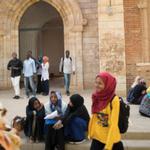
Life under siege: Community resilience and survival strategies in the Nuba mountains
This blog is rooted in my own lived experience of siege in El Dilling, in the Nuba Mountains. I witnessed how communities confronted isolation, shortages and insecurity, and how people relied on solidarity, local knowledge and creativity to survive. I lived through these conditions before eventually fleeing to eastern Sudan.
When survival becomes an act of resistance
For years, communities across large parts of the Nuba Mountains have endured severe isolation. These conditions have intensified since the outbreak of the ongoing war in Sudan in April 2023. Roads have become increasingly unsafe, markets have been disrupted, food and medicine have grown scarce, and health facilities have struggled to operate. The siege has sought to weaken communities through hunger, insecurity and separation from the outside world. But the hardship has produced an unexpected response: Necessity has generated creativity, fear has strengthened solidarity, and isolation has encouraged communities to draw on their own knowledge, resources and social networks.
Community solidarity: The circulating bowl
In the early days of the siege, one question overshadowed everything else: Where would the next meal come from?
Markets had closed, supply convoys had stopped, and food stocks were rapidly disappearing. In response, communities turned to the only resource that was still available: one another.
This was how the practice of the “circulating bowl” emerged. A woman who cooked porridge would divide it among several households. Ten families might collectively purchase a sack of sorghum and share it measure by measure. Those who owned cows distributed milk to their neighbours, while anyone with medicine shared it with someone who was ill.
Women were at the centre of these networks of care. They moved between households, often after dark, identifying who was hungry, sick, displaced or caring for orphaned children. In the absence of formal assistance, they became the community’s most dependable social safety net. Families opened their homes to one another and shared their food. Private hardship became a collective responsibility.
The lesson: The siege revealed a truth that we rarely see when resources are abundant: no one survives alone. Under extreme hardship, solidarity is not just a moral virtue, it is a practical and powerful strategy for staying alive.
Self-sufficiency: 'We farm even among the rocks'
After three months, household food stocks began to run out. There was no flour, sugar or cooking oil. The community therefore made a collective decision to grow their own food. But where could people cultivate when farmland was distant and the roads were dangerous?
They began farming in the karkur (a cave in the mountains) and in every small area of available land. Spaces between rocks were transformed into small plots. People cultivated beside their homes, along valleys and even on hillsides. No piece of productive land was considered too small.
Communities also returned to traditional local crops and seed varieties, including millet, sorghum, beans and sesame. These crops were well adapted to the local environment, could withstand dry conditions and required little or no chemical fertilizer.
As money became scarce and markets ceased to function, barter re-emerged as a central means of exchange. One household exchanged onions for salt, while another traded tomatoes for seeds. Money lost much of its usefulness, and trust became the community’s most valuable currency.
Children learned how to cultivate the land, recognise the rainy season and identify the right times for planting and watering. Men and young people dug wells by hand to provide water for households, livestock and small farms.
The lesson: Under siege, food security does not depend only on external assistance. It has to be built from the land, local knowledge and the tools available within the community. Self-sufficiency becomes one of the strongest forms of resistance.
Community health: The village pharmacy
With the nearest hospital several days away and the roads cut off, communities faced an urgent question: how could they respond to malaria, injuries, childbirth and other medical emergencies?
In the absence of functioning health services, people relied on the already existing knowledge and experience in their communities. Traditional midwives took on an increasingly important role, assisting women during pregnancy and childbirth with skill, patience and care.
Households also drew on locally available plants and traditional remedies. Fenugreek, gum arabic, neem and karkadeh were used to manage everyday illnesses and symptoms. Older women became important sources of knowledge, and many homes established a small “treatment corner” containing basic remedies and supplies.
Young people learned essential first-aid skills. Straight branches were used as temporary splints, clean pieces of old cloth became bandages, and wounds were washed with boiled water and salt when proper medical supplies were unavailable.
These practices could not replace professional healthcare, essential medicines or fully equipped hospitals. Still, they were crucial emergency responses that helped communities cope and survive when formal health services were inaccessible.
The lesson: Local knowledge can become an invaluable resource during crisis. When communities are isolated from formal services, accumulated experience, practical skills and mutual care can provide a critical bridge to survival.
Therapeutic nutrition: Bulus porridge
One of the most distressing consequences of the siege was the spread of malnutrition. Children became weak and underweight, while pregnant and breastfeeding women struggled to obtain the food and nutrients they needed. Infant formula, vitamins and specialised nutrition centres were either unavailable or very hard to get hold of.
Faced with this crisis, village women asked a practical question: what ingredients do we already have that could help nourish a child?
The answer was Bulus porridge, a locally prepared, nutrient-rich meal made from available household ingredients. Sorghum or millet flour was mixed with ground peanuts, known locally as dukwa, and ground sesame. Honey or sugar and a small amount of salt were sometimes added before the mixture was cooked with water and served warm.
The porridge became an important meal for children under five, pregnant women and breastfeeding mothers. It was prepared regularly in homes using ingredients that families could obtain locally or share with one another.
Communities began to associate the porridge with visible improvements. Weak children appeared to regain energy, while pregnant and breastfeeding women received a more substantial and nutritious meal during a period of severe food scarcity.
Bulus porridge emerged from the knowledge, experimentation and cooperation of women responding to an immediate crisis. It demonstrated how local foods could be combined creatively to address urgent nutritional needs when external assistance was unavailable.
The lesson: Innovation often begins with necessity. In the absence of formal support, communities did not simply wait for assistance; they used their knowledge and available resources to create practical responses to hunger and malnutrition.
What the siege could not break
The siege of the Nuba Mountains radically transformed the region’s food, and social systems. It forced the area to abandon sustainable agricultural practices based on sorghum and millet and to rely heavily on smuggled commodities.
Although coping strategies such as smuggling, bartering and communal kitchens prevented famine, they did have severe health consequences for the population.
The security of the Nuba Mountains cannot be achieved by simply introducing new grains like wheat, it requires rebuilding local food sovereignty and lifting the siege.
The siege wanted to teach us helplessness, so it taught us creativity. It wanted to teach us despair, but it taught us resilience.
It wanted to divide us, but it united us. The coping strategies of the people of the Nuba Mountains are not stories of the past. They are lessons for the future: Lessons in how a community can turn a crisis into an opportunity to rediscover itself.
From the circulating bowl to bulus porridge, from the blackboard under the tree to the village pharmacy. It was all resistance.
This Sudanese Perspectives blog post is written by Alawia Osman Mohammed Koli, Faculty of Agricultural Sciences, Dalanj University.
The views expressed in this post are those of the author, and do not necessarily reflect the opinions of the SNAC project or CMI.
References
- IPC (2025) Sudan: Acute food Insecurity and Malnutrition Analysis Nuba Mountains Rome: IPC Global.
- WDP World food program (2025) Rapid Security Assessment Nuba Mountains, Khartoum: WDP Sudan
- OCHA (2024) Sudan Humanitarian Needs and Response Plan.New York: United Nations.